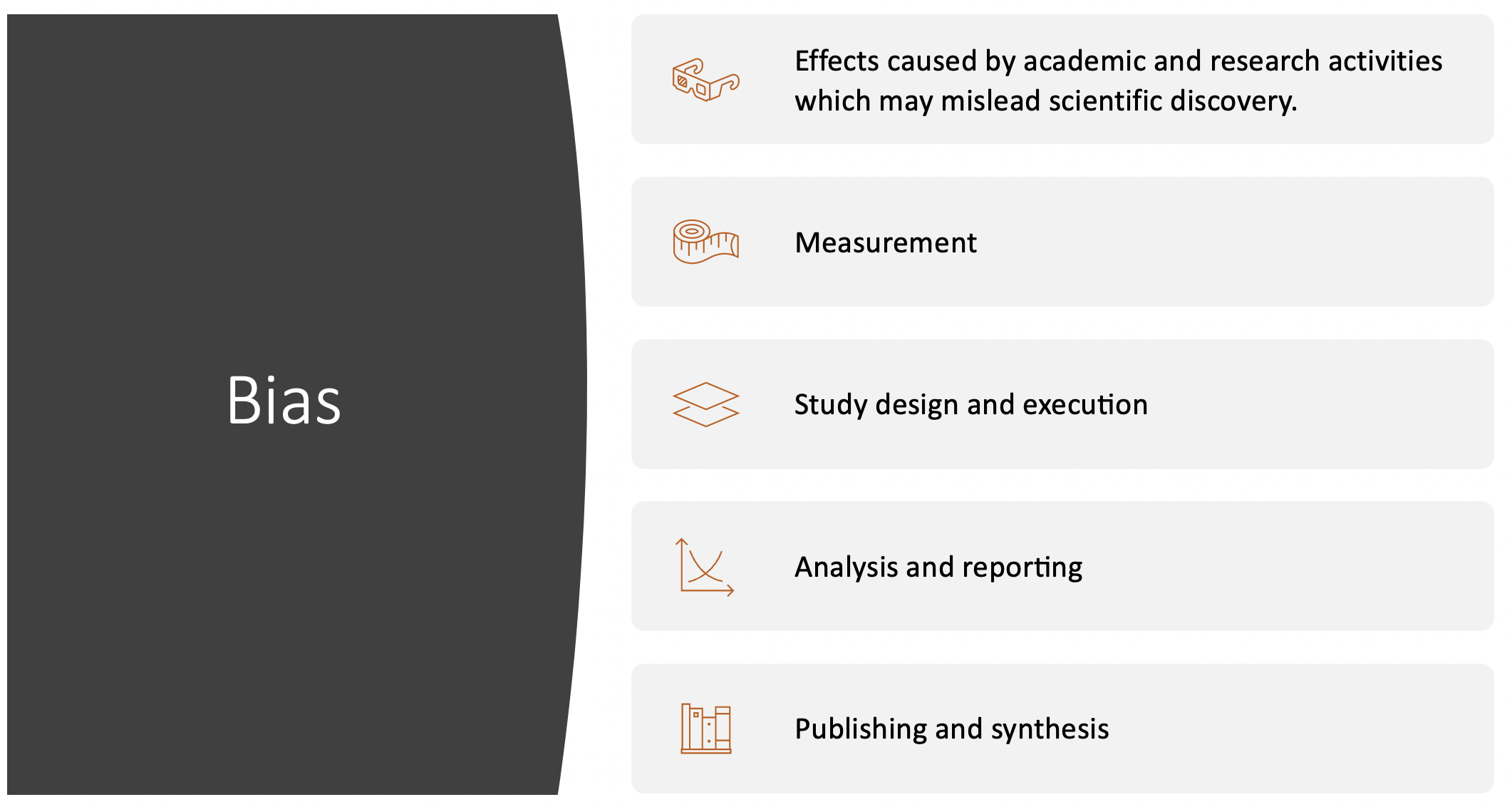

Bias enters health studies at all stages and often influences the magnitude and direction of results. To obtain the least biased information, researchers must acknowledge the potential presence of biases and take steps to avoid and minimise their effects. Equally, in assessing the results of studies, we must be aware of the different types of biases, their potential impact and how this affects interpretation and use of evidence in healthcare decision making.
Catalogue of Bias
Epidemiology for the uninitiated
Epidemiological studies measure characteristics of populations. The parameter of interest may be a disease rate, the prevalence of an exposure, or more often some measure of the association between an exposure and disease. Because studies are carried out on people and have all the attendant practical and ethical constraints, they are almost invariably subject to bias.
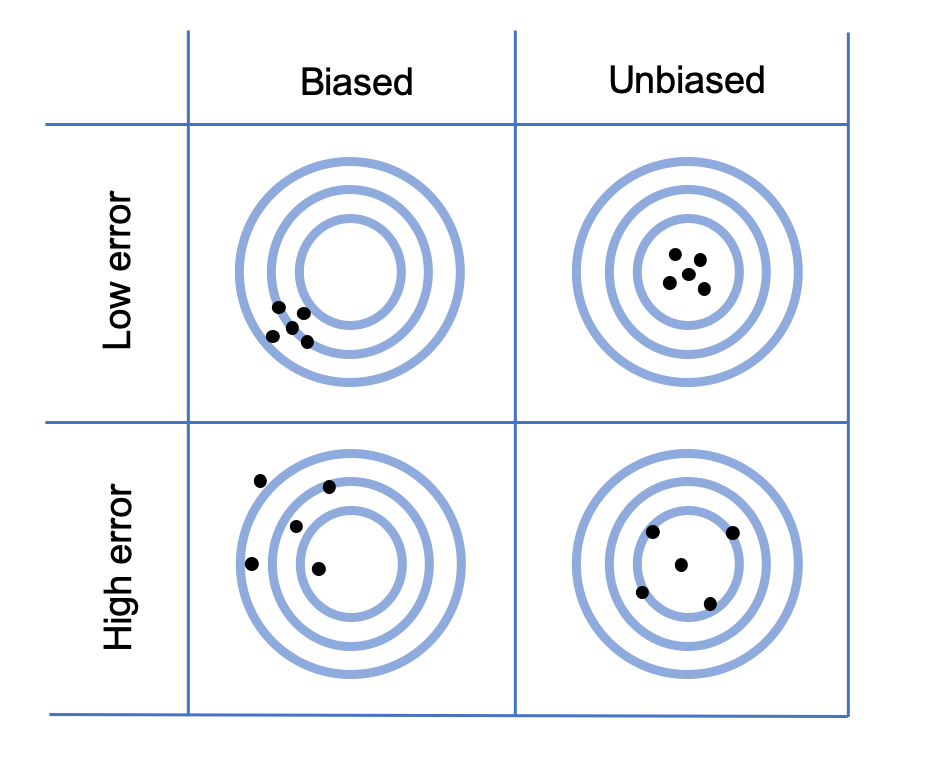
Bias and Error
Research participation effects
Note: This content is extra material and is not part of the core content if you are taking the course 8FO0113.
Research participation effects are caused by study activities such as signing consent forms, screening, treatment allocation, and outcome assessment. These biases have not received as much attention as other types of biases have, in particular with respect to randomised controlled trials.